Success is rarely a solo sport. We succeed because of the people we invite into our circle, and the people who invite us into theirs.
At our recent event in Atlanta, I moderated a panel discussion exploring how to build a personal advisory board that drives long-term growth. As we celebrate the 10th anniversary of BMO for Women, the event brought together accomplished executives and former athletes who’ve successfully translated the discipline, strategy, and teamwork of sports into business leadership.

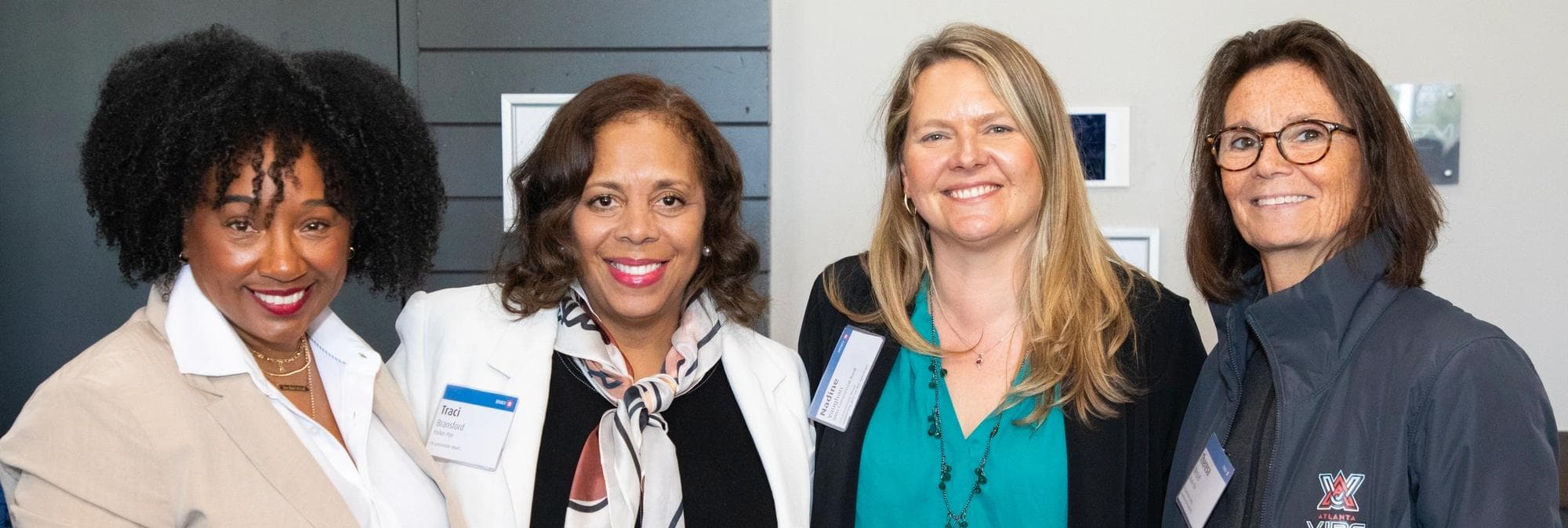
Traci Bransford, a Partner at Parker Poe, where she leads the law firm’s Sports & Entertainment Industry Team.
Tiffany Mack Fitzgerald, Founder of Black Girls Golf, a nonprofit that empowers African American women to thrive on and off the golf course.
Maritza McClendon, a 2004 Olympic silver medalist and the first African American woman to earn a spot on the U.S. Olympic Swim Team. She’s also a leadership speaker and an advocate for water safety.
Theresa Wenzel, a 30‑year sports industry veteran and President of the Atlanta Vibe professional volleyball team and Founder of Athletes2Leaders.
Each of these leaders has built an amazing career shaped by a mix of strategy, teamwork, advocacy and surrounding themselves with people they trust.
Building your bench
I kicked off the discussion with a quote from Oprah Winfrey: “Surround yourself with only people who are going to lift you higher.” It was a perfect segue into the panelists explaining how they curate a circle of trusted people who help with both their personal growth and growing their careers.
"I need someone on my team who has the respect of those outside of my team,” Bransford said. “Another piece is that they have to be someone I can be vulnerable enough with to let them know my shortcomings. I need them to know my vulnerabilities so that they can help level me up.”
The positive energy in the room was palpable early on, as McClendon noted that Wenzel was an extremely helpful connection during her corporate career journey. Even within the panel, we had a great example of a personal advisory board! It also put Wenzel’s advice about identifying a person who can become part of your inner circle into perspective. “People come into your life for a reason,” Wenzel said. “Too often, we don’t take the time to get to know people well enough to understand how they can open doors.”
Knowing that a lot of networking and dealmaking happens on the golf course, Fitzgerald has made it her home turf. I asked her how she networks with the intention of finding those personal advisors, and the advice she offers to the women who come through her organization.
“One of the things I knew for sure is that golf would put me in a place where I would be rubbing shoulders with people who had access and influence, and the golf course was a way to position myself to be there,” she said. “After four hours of sitting next to someone in a golf cart, you know whether you like them or not. It has by far been the best way for me to get know people genuinely and authentically.”
The power of the assist
Women supporting women is important in business and beyond (we got an up-close example of that as several of Bransford’s Parker Poe colleagues were in attendance to cheer her on). Mentorship and advocacy are key elements in this. I asked Bransford about the advice she gives to her mentees when they’re looking to build their own advisory boards.
“Show up,” she said. “You have to show up because at some time, there is going to be an opportunity where you’re going to need someone to show up for you. There’s reciprocity in mentoring.”
The influence of sports on developing leadership qualities
For many of us, confidence and resilience are skills that we build over our careers. For some, these skills are built earlier through sports. Wenzel described how her sport influenced how she approaches decision-making in her career.
“Confidence is not a destination,” she said. “We learn from every experience. You will either learn what to do or not to do through experience. I had a [basketball] coach who told me, if you’re going to make a mistake, make an aggressive mistake. He gave me permission to go for it, and that stayed with me.”
For McClendon, it was the knowledge that she would fail more than she would succeed as an athlete. “When I don’t win, it’s an opportunity to learn what I could do differently so that I can show up the next time and be the best person I possibly can. I just continuously got up every time I was knocked down.” Taking that approach in your career can have the same impact.
Words of wisdom
We closed the event with the panelists offering rapid-fire responses to the following question:
What is your best networking tip?
Bransford: “Look the person directly in the eye and be intentional about hearing them. Looking and listening so you can meet them where they are.”
Fitzgerald: “Understand that networking is a two-way street. Don’t just show up looking for what you can get; also know what you can offer.”
McClendon: “Make sure you are there to possibly find your next advisory board member. Don’t just collect business cards and make it transactional.”
Wenzel: “Be an active listener and find common ground.”
BMO’s Atlanta team is deeply committed to creating spaces like this—where conversation sparks opportunity, and where community helps fuel progress. The energy in the room during the event was powerful, and it reflects what’s possible when we come together with intention and optimism.