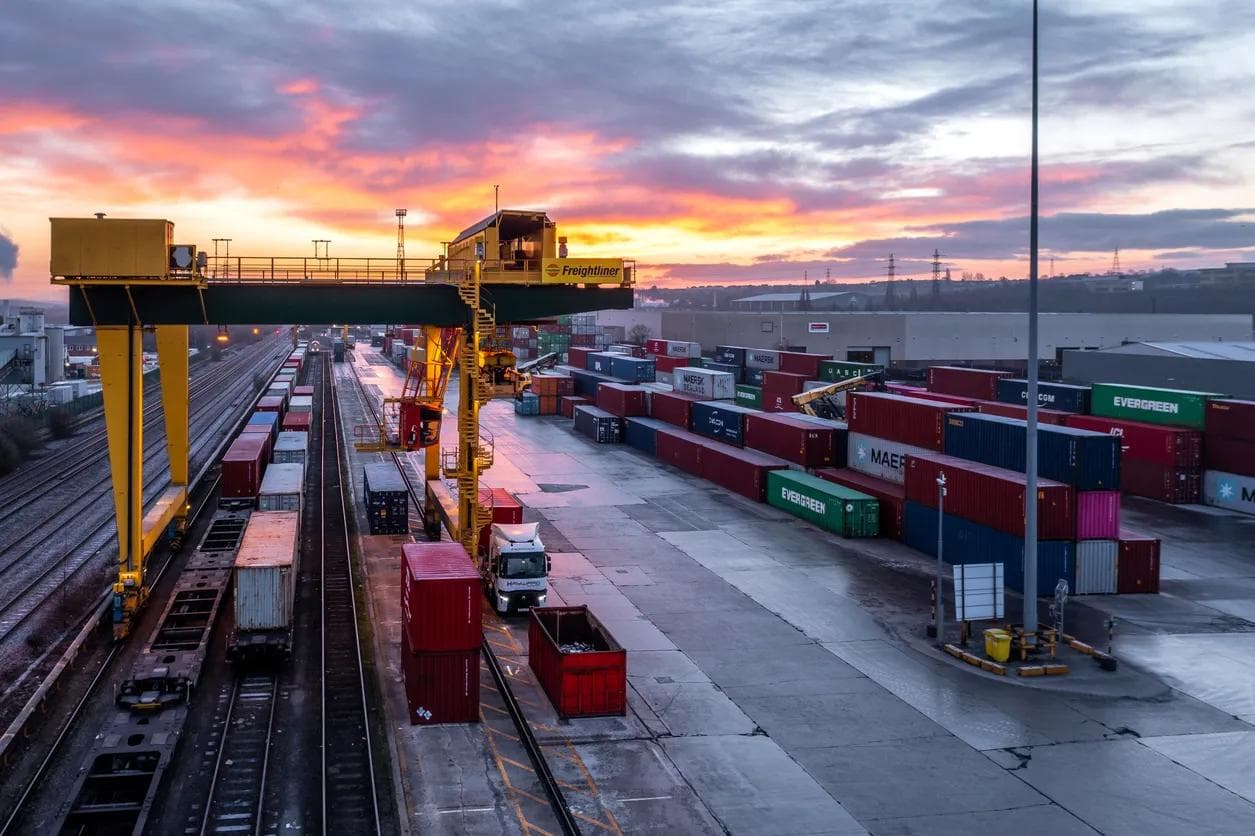
Several overlapping structural forces, including shifting trade dynamics, supply chain realignments, evolving energy systems, and shifting interest rate environments, have led to volatile market conditions.
This type of environment leads investors to reassess portfolio risks. In unpredictable conditions, assets priced on long dated assumptions tend to see their valuations revised quickly regardless of any changes to their underlying fundamentals. In response, investors often look to shift their focus to sectors that offer cash flow visibility, balance sheet strength, and tangible value. The question is less about where growth can be found quickly, but where value can be preserved, compounded, and protected.
The answer increasingly lies in industries that tend to be undervalued but consistently demonstrate durability: heavy assets, low obsolescence (HALO) companies.
The hidden strengths of HALO industries
When markets get choppy, investor preferences shift from aggressive growth to resilience; specifically, companies with stable cash flow, strong balance sheets, and tangible value. HALO companies and sectors fit the bill. These are the companies essential to the economic engine; they transport goods, produce energy, and supply materials.
While companies whose valuations depend heavily on long range assumptions can realize significant near-term growth, their market value tends to swing dramatically when conditions change. Industries grounded in physical assets, on the other hand, are not typically considered good prospects for near-term growth.
After all, these are businesses that have high upfront costs, rely on long asset lifespans and operational scale, and must navigate regulatory complexity. Heavy assets are also hard to modernize; updating a factory, retrofitting a pipeline, or redesigning a supply chain network are multiyear initiatives requiring major capital commitments. These are all reasons why valuations for these industries often lag those in sectors such as technology, where investors reward scalability above other traits.
However, these traits also make these businesses difficult to replicate as the cost to rebuild and replace these assets far exceeds the current market valuation. And in an uncertain operating environment, scarcity proves more valuable than speed. Companies with difficult-to-replicate physical assets possess an underlying resilience that markets often underappreciate; at least until market volatility highlights just how scarce those assets truly are.
Capital-light sectors
For years, capital-light sectors such as technology benefited from low interest rates and abundant capital. Their scalability and low margin costs often justify premium valuations during periods of relative stability. Because they rely heavily on investor confidence in future assumptions; however, their valuations are more sensitive to rapid market fluctuations in more volatile conditions.
This does not diminish the importance of digital innovation or the long-term growth prospects of capital-light sectors. Instead, it highlights the imbalance that can happen when a sector is priced for perfection rather than performance and long-term durability.
It’s also important to note that asset heavy doesn’t mean stagnant or lacking innovation. Technology is increasingly becoming more integrated into physical assets rather than replacing them. Automation, data analysis, predictive maintenance, and AI optimization are improving efficiencies, safety, and margins for industries of all stripes. And it’s this integration that is creating a new kind of value proposition for investors, one where durability meets digital intelligence.
HALO companies and sectors may appear less exciting on the surface, but they offer something rare: resilience rooted in scarcity, capital discipline, and long-term necessity. In a world where uncertainty is the new normal, asset heavy industries deserve renewed attention.